.png)
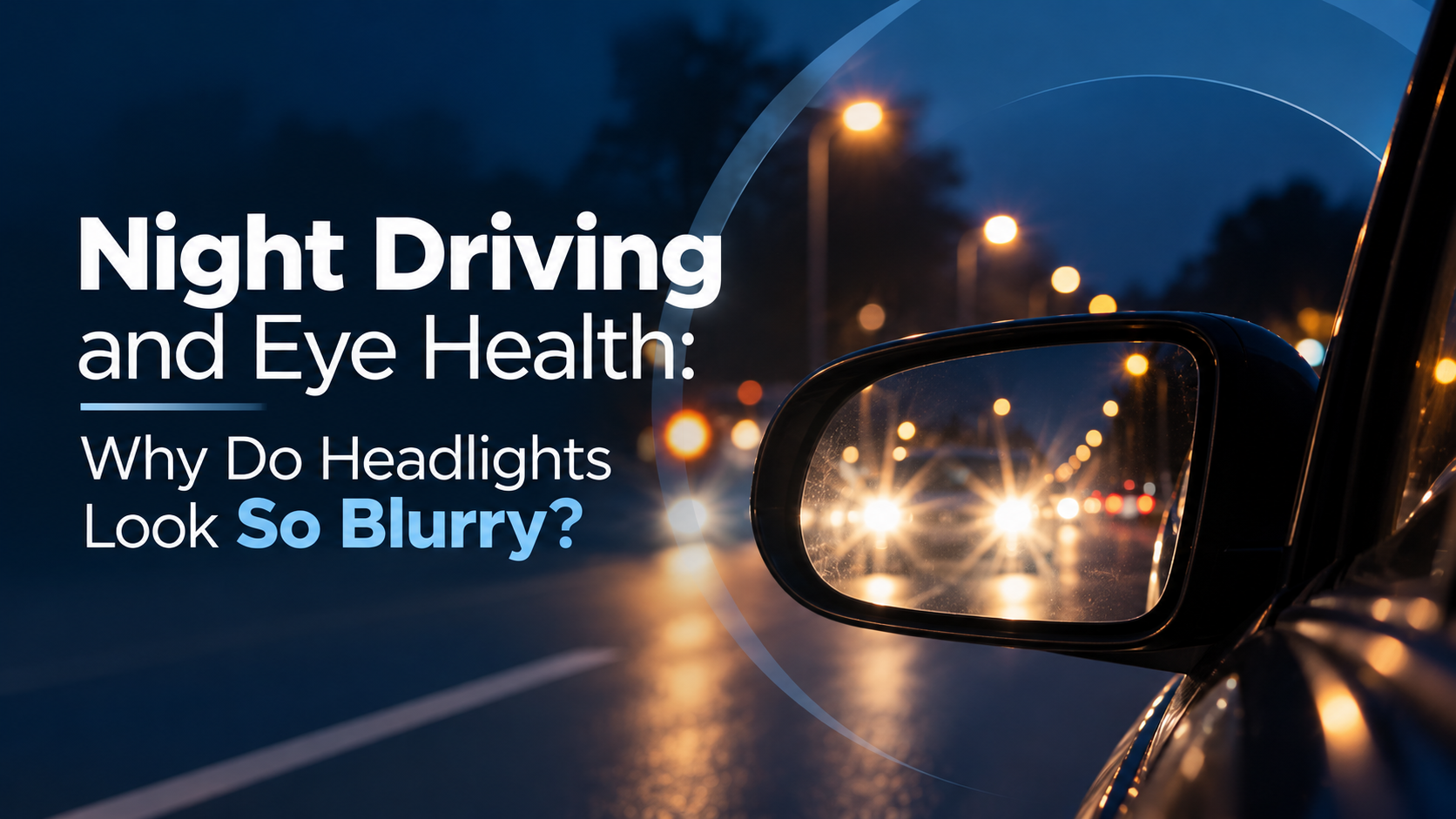
Night Driving and Eye Health: Why Do Headlights Look So Blurry?
Do headlights look too bright, blurry, or surrounded by halos when you drive at night? Your eyes may be telling you something.
Driving at night can become challenging when oncoming headlights create glare, streetlights appear star-shaped, or road signs look blurry. While some glare is normal in low-light conditions, persistent difficulty seeing clearly at night may indicate an underlying vision problem.
From an outdated glasses prescription to cataracts or astigmatism, several factors can affect your night vision. Understanding the cause can help you know when to seek an eye check-up in Faridabad.
5 Reasons Headlights Look Blurry at Night
1. Uncorrected Vision Power or Astigmatism
Astigmatism occurs when the cornea or lens has an irregular curvature, affecting how light focuses inside the eye. It can cause blurred vision, glare, halos, or streaks around headlights.
An outdated glasses prescription can also make it harder to see road signs, vehicles, and pedestrians clearly at night. An eye examination can help determine whether your prescription needs updating.
2. Cataracts
A cataract develops when the natural lens of the eye becomes cloudy. This can cause hazy vision, increased sensitivity to light, halos around headlights, and difficulty seeing in dim lighting.
If night driving has become increasingly uncomfortable, a cataract evaluation may help identify whether cataracts are affecting your vision.
3. Dry Eyes
Long hours of screen use, air conditioning, and environmental conditions can contribute to dry eyes. An unstable tear film may cause blurry or fluctuating vision, which can make driving more uncomfortable.
If you also experience burning, irritation, redness, or a gritty feeling, consider getting your eyes examined for dry eye.
4. Age-Related Changes in Vision
As we grow older, changes in the eye can affect visual clarity and the ability to see comfortably in low-light conditions. Cataracts also become more common with age and may increase glare from headlights.
If you notice increasing difficulty driving at night, don't assume it is simply a normal part of ageing. A comprehensive eye examination can help identify the cause.
5. Other Eye Conditions
Certain eye conditions, including glaucoma and retinal disorders, can affect vision. Glare alone does not establish a diagnosis, but persistent night-vision difficulties or other new visual symptoms deserve professional evaluation.
An eye specialist can assess your vision and determine whether additional tests are needed.
How Can You Make Night Driving More Comfortable?
A few practical habits may help improve visibility while driving at night:
- Keep your glasses clean: Smudges and scratches can worsen glare.
- Check your prescription: Wear the correct glasses or contact lenses.
- Clean your windshield: Dirt and streaks can scatter light and increase glare.
- Maintain your vehicle's lights: Ensure headlights are clean and properly adjusted.
- Take breaks when needed: Avoid driving when your vision feels strained or you are fatigued.
These steps can help, but they cannot replace an eye examination when symptoms persist. If you cannot see the road safely, avoid driving until your vision has been assessed.
When Should You See an Eye Specialist?
Consider booking an eye examination if you experience:
- Persistent glare from oncoming headlights
- Halos or starbursts around streetlights
- Blurry road signs or difficulty spotting pedestrians
- Increasing difficulty driving after dark
- Frequent changes in your glasses prescription
- Cloudy or hazy vision
Sudden vision loss, severe eye pain, or sudden major changes in vision require urgent medical evaluation. Do not wait for a routine appointment if these symptoms occur.
Night Vision Check-Up at Drishti Eye Centre, Faridabad
If headlights appear blurry or night driving has become uncomfortable, identifying the underlying cause is the first step towards appropriate care.
At Drishti Eye Centre, Faridabad, a comprehensive eye examination can help assess your vision and identify possible issues such as refractive errors, cataracts, dry eyes, or other eye conditions.
If you are looking for an eye specialist in Faridabad, eye check-up in Faridabad, or cataract evaluation in Faridabad, consult an ophthalmologist to understand the right next steps for your eye health.
Frequently Asked Questions
Why do headlights look blurry when I drive at night?
Possible causes include astigmatism, an outdated glasses prescription, cataracts, dry eyes, and other vision problems.
Are halos around headlights a sign of cataracts?
They can be a symptom of cataracts, but other eye conditions can also cause glare and halos. An eye examination is needed to identify the cause.
Can glasses help with night-driving problems?
Yes, if the problem is caused by an uncorrected refractive error. However, glasses may not resolve symptoms caused by cataracts or other eye conditions.
When should I get my eyes checked for night-driving difficulties?
Arrange an eye examination if glare, blurry vision, or difficulty seeing road signs persists or worsens. Seek urgent care for sudden or significant changes in vision.
See Clearly. Drive Safely.
Night-driving difficulties should not be ignored when they affect your ability to see the road clearly. The right eye examination can help identify the cause and guide appropriate treatment.
Drishti Eye Centre, Faridabad
Centre 1: 20–21F, Fruit Garden, NIT 5, Faridabad
Centre 2: Main Market, Sector 17, Faridabad
Website: www.drishtieyecentre.in
Email: info@drishtieyecentre.in

Business it will frequently occur that greater pleasures have repudiated choose enjoy pleasure that has no annoying.- Alex Jhon Martin
Making Every Step Easy
Holds in these matters too this principle off selection held rejects pleasures too secure other greater pleasures or else he endures again is there anyone who loves or pursues or desires to obtain pain of itself, because it is pain veniam, and quis nostrud exercitation produr enim ad minim venia trudco.
Leave a Reply